
Intro
Before anything else, I want to clear one thing first — my journey with IEMs is quite long, and over the time I had the chance to try many IEMs from different brands and different price points. And among all of them, Softears is always one of my first pick. This brand have a very strong track record in terms of product quality, tuning, and overall value — and till now I didn’t really see any major flop from them.
Because of that, I always had a bit more trust on their products than most other brands out there.
And the Twilight is also not something new in the market. Compared to current releases, this is already a older model — but still they are continuing it, and honestly there is a good reason behind that.
I’m using this IEM for more than 2 years now, and I can still say very clearly — no other IEM in my collection could really replace this. It just does something in a very natural and musical way that is genuinely hard to find, especially at this level.
And yes, maybe I already gave a small spoiler here 😅 — but still, if someone is looking for a well tuned single dynamic driver IEM, the Twilight can be a very good reference point. The fact that it’s still relevant after all this time really says something on its own.

Disclaimer
I bought this product with my own money, full retail price. So everything I’m saying here is based on my personal experience after using it for around 2 years.
No one influenced me to say anything good or bad about this product. All opinions are completely mine, based on my own listening and testing.
Build & Design
According to Softears, the shell is made from high quality aluminum alloy — and in hand, it actually feels both strong and lightweight at the same time. Each shell is around 6gm, so initially it might feel very light, almost too light for this price range.
But after using it for a long time, it’s clear that they didn’t really compromise anything here. The build quality is solid, and even after 2 years of usage there is still no issue from my side. No paint problem, no structural issue — everything is still intact.
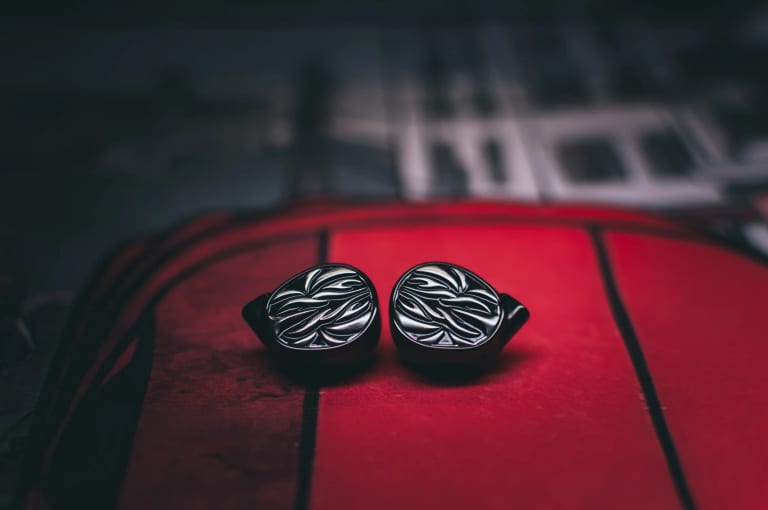
Design wise, it’s quite plain and minimal. The outer shell is inspired by speaker design, so there is a bit of similarity if you look closely. But the attention to detail is very nice. The matte black finish looks clean and understated — it doesn’t try to be flashy, but in a way that’s exactly what makes it special. For me this is like a silent killer design. Very simple, but very confident.

Fit & Comfort
this is probably one of the most important part for this IEM. the shell shape is a bit different compared to regular designs, so getting the perfect fit can take some time.
you may need to rotate it slightly and adjust in different angles to get the proper seal. and once you get that correct fit, then only you will hear the full potential of this IEM.
comfort itself is actually quite good. once it sits properly, you can use it for long listening sessions without much fatigue. there is no sharp edge or pressure point, so it feels easy in the ear.
but the only issue is the fit stability. when you move around or walk, sometimes the seal can break, and you may need to adjust it again. so for outdoor usage, it’s not the most ideal option.
this IEM feels more suitable for stationary listening. just sit down, relax, and focus on the music. in that kind of setup, it really performs at its best.


How I Use It (Cable, Tips & Setup)
This is a 930 USD IEM but still the stock cable is a bit of a disappointment. And I know there is a lot of people who don’t really care about cables that much — but personally I always like to see a good quality cable as stock. And even if not, upgrading cable and tips is kind of my rule.
Most of my personal collection IEMs are not in stock configuration. I always change something based on my preference. And for the Twilight, I’m personally using the Softears Tempest cable with this.
The stock UC tips is actually really good, no complain here. But if you want a little bit more spiciness and energy, then the Softears UT tips is a must try for this IEM. With this setup the sound becomes more resolving — you still keep that smoothness, but you will notice better treble extension. Mids also becomes more natural and more resolving, and specially female vocals sounds more lively and engaging with this combination.

Source Compatibility
This IEM have an impedance of 16Ω and sensitivity around 116dB, so yes it is very sensitive. And one thing I clearly noticed in my testing — if your source have any kind of noise or hiss, this IEM will easily expose that.
Because of this sensitive nature, you can’t really get 100% performance from every source. It is a bit selective when it comes to pairing. But when you match it properly, the result is really impressive.
From my experience, this IEM pairs best with R2R and 1bit discrete DAC setups. Now I know many people will say “these DAC types also have background noise sometimes” — and yes that is true. But if you use good quality devices, the result is just different. Devices like FiiO K13, HiBy RS2, iBasso DX270 R2R, and FiiO M33 R2R gives exceptionally good pairing with this IEM.
I also used this with Cayin N7 and Cayin N6iii and the output was really good. And single dynamic driver IEMs usually scales very well with proper amplification — and Twilight is a perfect example of that. When I paired this with the Cayin C9 and N7 combo, it just transformed the sound to another level. The depth, the control, everything just gets better.
And one special mention — if anyone have the Cowon Plenue R2, this single DD IEM can honestly be one of the best investment for your music journey.
I also noticed that with tube amps, this IEM shows a very unique and exceptionally musical character. Sources like MuseHiFi M5 Ultra, MuseHiFi M6 Double, Cayin RU9, and Cayin N3 Ultra gives a very analog and smooth tonality — and honestly I just love this kind of character with the Twilight.

Sound Performance
Tonality
So the Softears Twilight have a warm tonality — but it’s not just a simple warm tuning. There is a good balance in how the warmth is presented, so it never feels too heavy or muddy. Instead it feels clean, controlled, and very natural.
After this IEM came out, for people who prefer warm sound this became one of the top choice very quickly. But the interesting thing is, it’s not only about the warmth. This IEM also offers exceptionally good vocal presentation, which is one of the main reason why it really stands out from the crowd.
With the Softears Tempest cable and UT tips, the vocals becomes more full and more engaging. Male vocals sounds thick and grounded, and female vocals gets a bit more open and smoother. It doesn’t feel forced or boosted at any point — everything feels very natural, like it was always supposed to sound this way.
The treble is smooth and well controlled. It doesn’t try to grab attention, but it’s always there supporting the overall sound in the right way. You still get enough extension so it never feels dull, but at the same time there is no harshness or sharpness anywhere.
Overall this is a very natural sounding IEM. It’s not something that will wow you instantly with crazy detail or aggressive technicality — but the more you listen, the more you start to understand how well tuned this actually is. And for long listening sessions, this kind of tuning just works perfectly.

Bass
The bass presentation on the Twilight is full, big, and heavy — and it works really well. What makes it special is how it balance mid bass and sub bass without one overshadowing the other.
Sub Bass
The sub bass is controlled but hits with real depth and weight. Listening to Magnetic Lies by Malia and Boris Blank, those slow pressurized synth pulses that runs underneath the whole track — they come through with this deep rumbling quality and a big, physical kind of feeling. It’s the type of sub bass extension you feel more than you actually hear. Angel by Massive Attack is another good test for this. The opening bass synth and that low-end hum that builds underneath Elizabeth Fraser’s vocals — the Twilight renders that whole atmosphere with a controlled but immersive depth that a lot of IEMs just don’t manage that cleanly, honestly.
Mid Bass
The mid bass is tight and hits hard. Poem of Chinese Drum by Hok-man Yim is one of those track that really expose mid bass quality — the sharp percussive strikes of the ban-gu drum and the resonance of the larger barrel drums, they need both speed and weight to sound right, and the Twilight delivers on both. The separation between individual drum hits is clean, the impact is there, and nothing really bleed into each other. Pneuma by Tool is another great example — the way Danny Carey’s kick drum and floor toms sits in that mix, heavy and layered but still distinct — the Twilight keep it all organized while still making it punchy and alive feeling.
Bass guitars also sounds remarkably immersive on this — the texture and body of the low strings comes through in a way that’s fun but never overdone. Drums feel lively and natural, the kick has real presence to it.
For presenting bass in the right and natural way, the Twilight is honestly a benchmark. The quantity is generous, but the quality keeps up with it — and that’s really the harder thing to pull off.

Mid Range
If you’re someone looking for a warm and smooth midrange focused presentation, then this can be one of the absolute best options out there. The Twilight offers a very natural timbre with a warm tone, and because of that it brings a good sense of depth and emotion in the midrange. It doesn’t feel thin or dry at any point — everything comes with a bit of body, which makes the listening more engaging and just more enjoyable overall.
Male Vocals
Male vocals is clearly the main highlight here. They have good weight and authority, so it feels lively and natural at the same time. In tracks like Tears In Heaven by Eric Clapton and Can’t Help Falling In Love by Elvis Presley, the vocal delivery comes forward with a very organic tone. You can notice the subtle texture in the voice, the breath control, and how the acoustic guitar sits just behind the vocal without really interfering. The light string plucks, soft percussions, and background arrangements all stays in their place — which helps the vocal to shine more naturally.
Artists like Gregory Porter and Phil Collins also sounds very impressive here. Their deeper vocal tone gets that proper body and warmth, and the presentation feels complete. It doesn’t feel pushed or artificial, but still very present and grounded.
Vocals overall sounds clear and clean, and there is no noticeable bleed from the bass into the mids — which is very important for this kind of tuning. Everything feels well separated but still connected in a natural way.
Female Vocals
Now coming to female vocals — this might not be for everyone. If someone prefer more energy or brightness in female vocals, then it may feel slightly relaxed here. There is a bit less forwardness in the upper mids, so it doesn’t have that extra sparkle or sharp presence that some people look for.
But still, it offers a very natural presentation. Artists like Diana Krall, Sarah McLachlan, Adele, and Madonna sounds smooth and controlled on this. The vocals feel soft, slightly laid back, and very easy to listen for long time without any fatigue.
Maybe if there was a bit more energy, female vocals could sound more exciting for some listeners. But then again, that would probably take away this soft and smooth nature that makes the Twilight so special. And personally, I really prefer this kind of presentation — it feels more relaxing and natural, especially for longer listening sessions.

Treble Performance
First thing first — if you’re a treble head who prefer very aggressive, energetic, and ultra airy presentation, then maybe this IEM is not fully for you. But if you’re looking for something smooth and easy going, the Twilight is honestly one of the best in this category.
The treble here is smooth and slightly recessed, but it still carries good amount of information. The micro details are there, but this IEM doesn’t force those details into your face all the time. When you’re fully focused on the music, you can easily notice the small nuances and tiny background details — but if you’re distracted, the Twilight is not going to aggressively present every little thing just to grab your attention.
And honestly, this is one of the main reason why I enjoy this tuning so much. A lot of critical sounding IEMs tries too hard to show excessive details, and sometimes that makes the sound feel sharp or unnatural. Twilight doesn’t do that. It always keeps that smooth and calming presentation without sacrificing the actual musical enjoyment.
At the same time, it still gives enough air and energy to enjoy the music properly. Because of that balance, this IEM works really well across almost every genre without causing any fatigue.
With the Softears UT tips, the treble performance gets a bit better. The titanium nozzle design gives some instruments a little more life and openness, and the extension also improves slightly — so the overall presentation feels more natural and complete.
In Depart in Peace by John Tavener, the opening section sounds genuinely beautiful on the Twilight. The layering of orchestral instruments, the soft string movements, and the spacious reverberation all comes through in a very smooth and atmospheric way. The violin and upper string sections have this soft texture that never once turns sharp or fatiguing, which for a piece like this, where the whole mood depends on that gentleness, really matters.
Cello Song by Bill Horist and Aiko Shimada is another good example. The cello presentation sounds rich and detailed, while the surrounding instrumental textures stays open and natural. String vibrations, subtle plucks, and the room ambience are all reproduced in a very pleasing way, nothing feels exaggerated.
And in Money by Pink Floyd, the cymbal strikes, the cash register effects, the electric guitar textures and background details all comes through very cleanly. The treble never feels sharp, but still maintains enough clarity to keep the track engaging and fun.
Could there be a little more air and sparkle? Maybe. And yes, that might make it more impressive technically. But then again, it would probably also lose this relaxed and easy going nature that makes the Twilight so enjoyable for long sessions. Personally, I prefer this smoother presentation, it allows very long listening without any fatigue, and that for me is more valuable than chasing extra technicality.

Technical Performance
Because of the Twilight’s warm and smooth tonality, its technical performance doesn’t always get the main attention at first. Most people usually focus more on the musical and relaxing nature of the sound. But behind this smooth presentation, there is actually very solid technical capability hidden underneath.
Soundstage
The soundstage on this IEM is really impressive. The presentation feels big, open, and spacious — and because of the large semi open-back style design, the stage have a very natural openness which helps the sound breathe properly. It never feels congested or overly intimate.
What I personally like here is that the stage doesn’t feel artificially stretched. Instead it feels very natural and well behaved. Instruments have proper positioning, and there is enough empty space between sounds so the overall presentation feels clean and organized. Vocals and instruments doesn’t only spread left and right — there is also a layered front-to-back presentation which adds more depth and immersion to the listening experience.
Imaging & Layering
Imaging performance is also strong here. Directional cues feels accurate and movements inside the stage are easy to track — and this becomes more noticeable in live recordings and orchestral tracks where positioning really matters.
Layering is also very good. Even on busy tracks, different instruments stays separated nicely without collapsing into each other. You can still follow individual elements inside the mix quite easily, which is honestly not something every IEM at this level can pull off cleanly.
Dynamics & Driver Control
The dynamics on the Twilight is one of its stronger points. It handles the transition between quiet and loud sounds very naturally. Softer passages feels delicate and controlled, while louder moments comes in with good impact and energy without ever sounding forced or exaggerated.
Control is also quite impressive for a single dynamic driver setup. The driver responds fast enough to keep drum hits and instrument strikes clean and impactful — but at the same time it can slow down naturally when the track demands deeper and more atmospheric low-end presentation. Because of that, bass notes can feel heavy and deep without losing their texture, while faster passages still maintain good clarity and separation.
Overall, the Twilight have a very strong technical performance. Maybe it doesn’t present its technicality in an aggressive or analytical way — but once you spend more time with it, you start to realize how capable this IEM actually is behind that smooth and musical tuning. It’s the kind of thing that quietly impresses you the more you listen.

Conclusion
The Softears Twilight is one of those IEMs that doesn’t try to impress you on the first listen with flashy technicality or aggressive detail retrieval. Instead it takes a different approach — and honestly, that approach works really well.
After more than 2 years with this IEM, I can say very clearly that this is one of the most complete and well tuned single dynamic driver IEM I have heard in this price range. The warm and natural tonality, the exceptional vocal presentation, the well balanced bass, the smooth and fatigue free treble — everything works together in a very cohesive way. Nothing feels out of place, and nothing feels forced.
The technical side is also stronger than it first appears. The soundstage is big and natural, imaging is accurate, layering is clean, and the dynamics feels very organic. It’s not the most analytical IEM out there, but it does everything in a very correct and musical way — and for long listening sessions, that matters a lot more than people usually think.
With the right pairing — Softears Tempest cable, UT tips, and a good R2R or tube based source — this IEM can honestly reach a level that is hard to find even in much more expensive options. The scaling capability is real, and the reward for proper pairing is very noticeable.
Is it perfect? Maybe not for everyone. If you’re someone who prefer a very bright, aggressive, or detail forward presentation, then the Twilight might feel a bit too relaxed. But if you value naturalness, musicality, and long term listening comfort — then this is very hard to beat.
For me personally, no other IEM in my collection could really replace this. And after 2 years, that says everything.